📄 Digital book in PDF · read it on your phone or print it
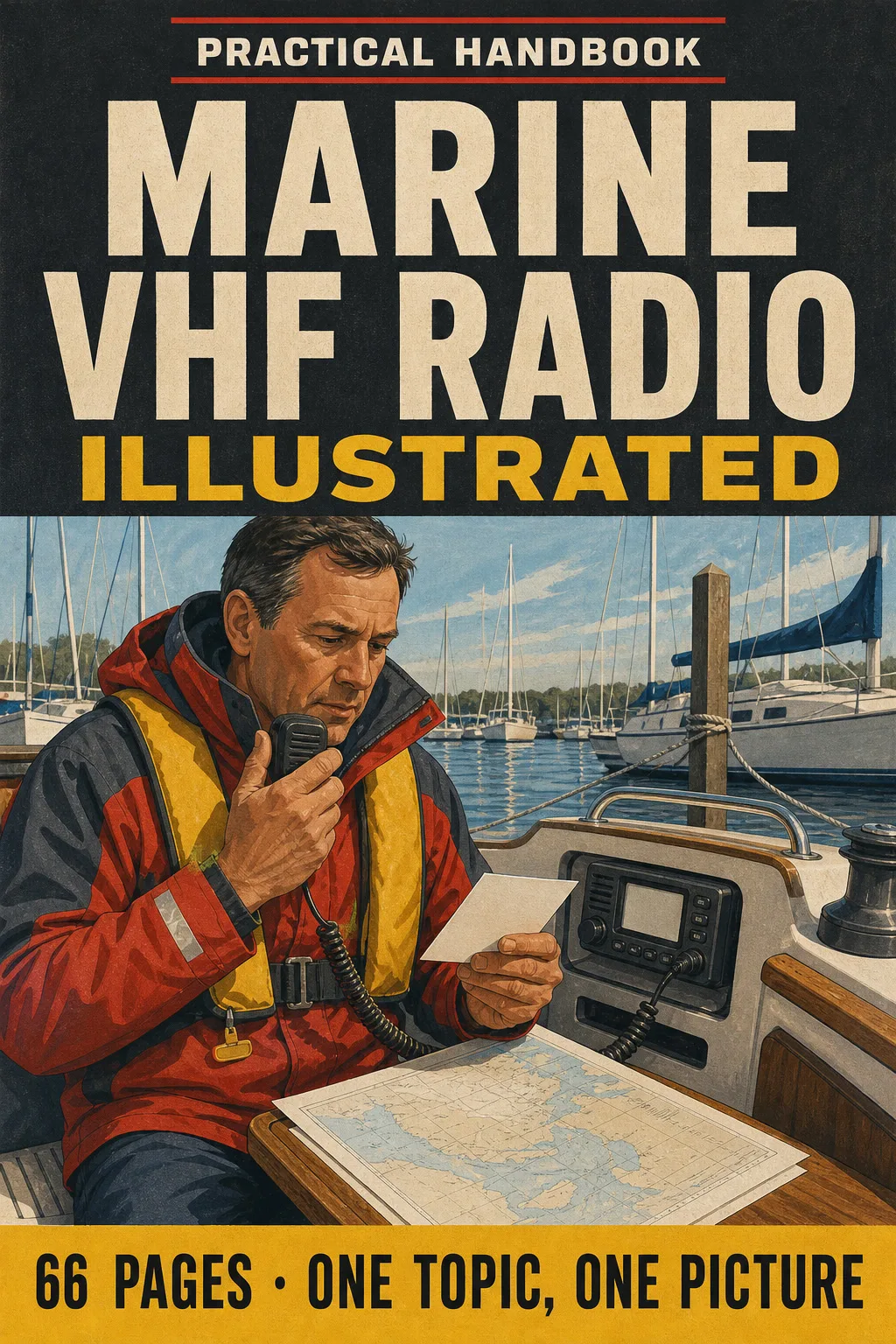
For Canada's Restricted Operator Certificate (Maritime) and the DSC endorsement: channels 16 and 70, the phonetic alphabet, the routine call, Mayday, Pan-Pan and Sécurité, your MMSI, EPIRBs and sea areas. Every topic gets its own page: the drawing first, then what you need to remember. 66 illustrated pages.
🔒 Secure checkout · PDF by email · 30-day guarantee
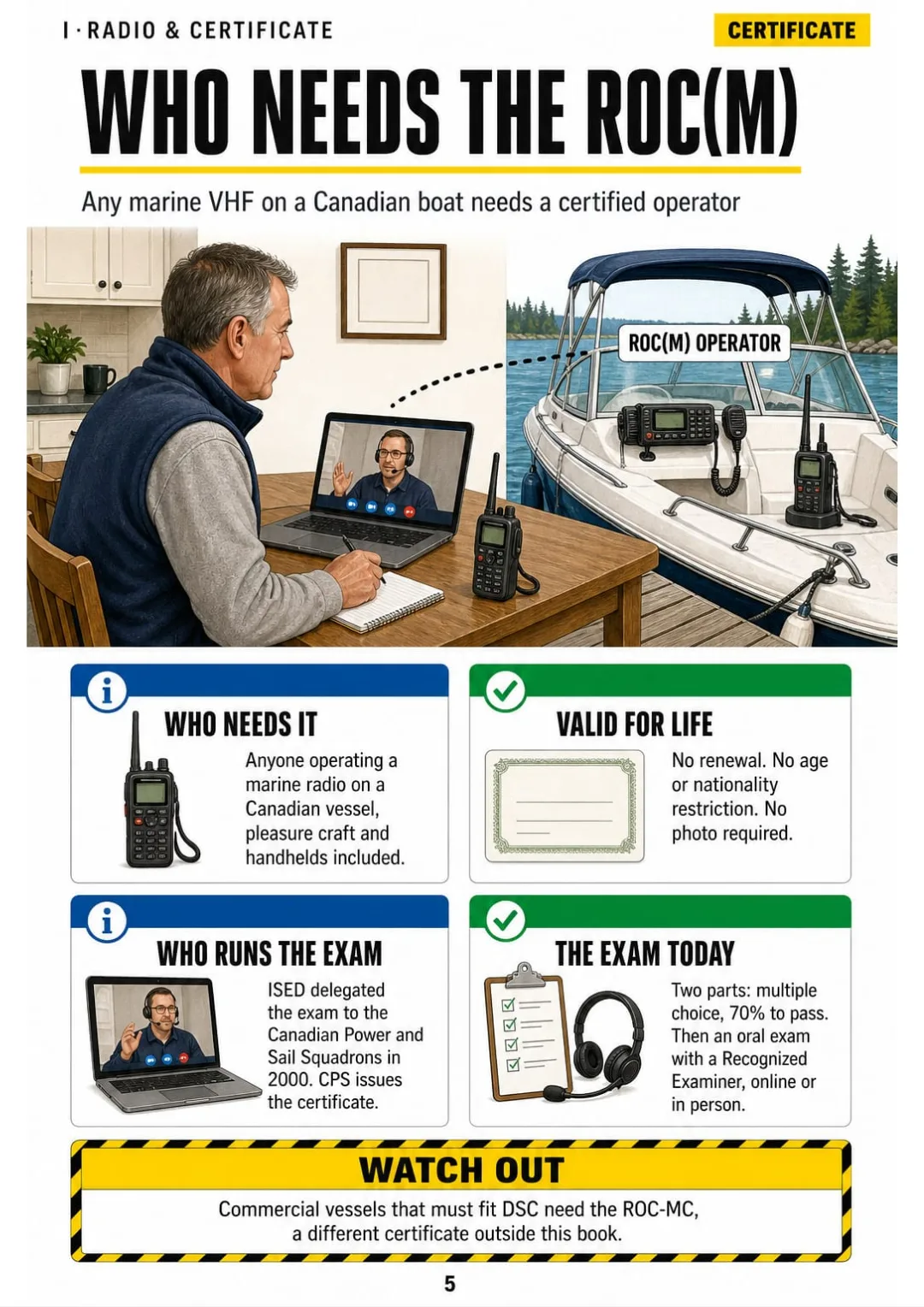
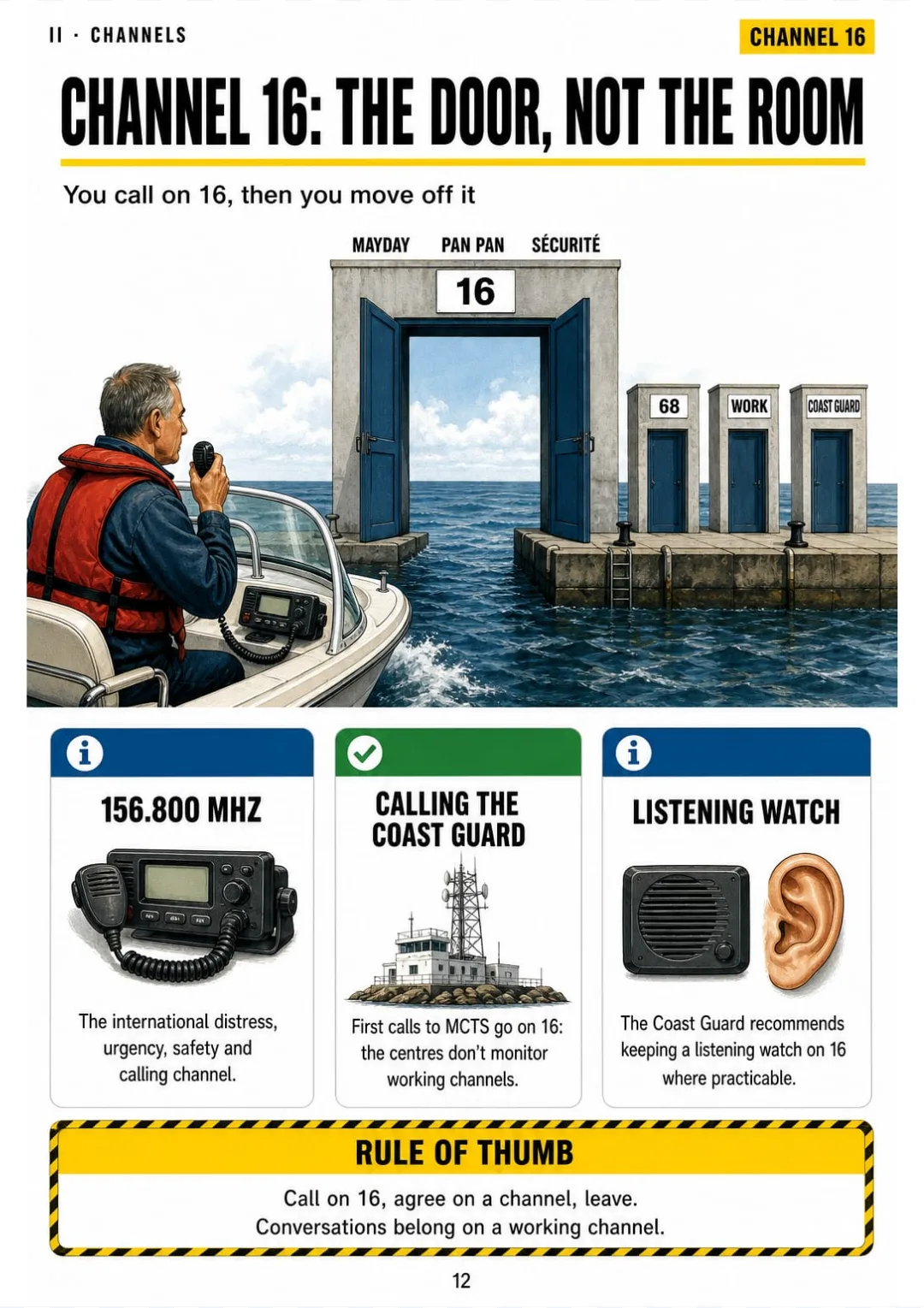
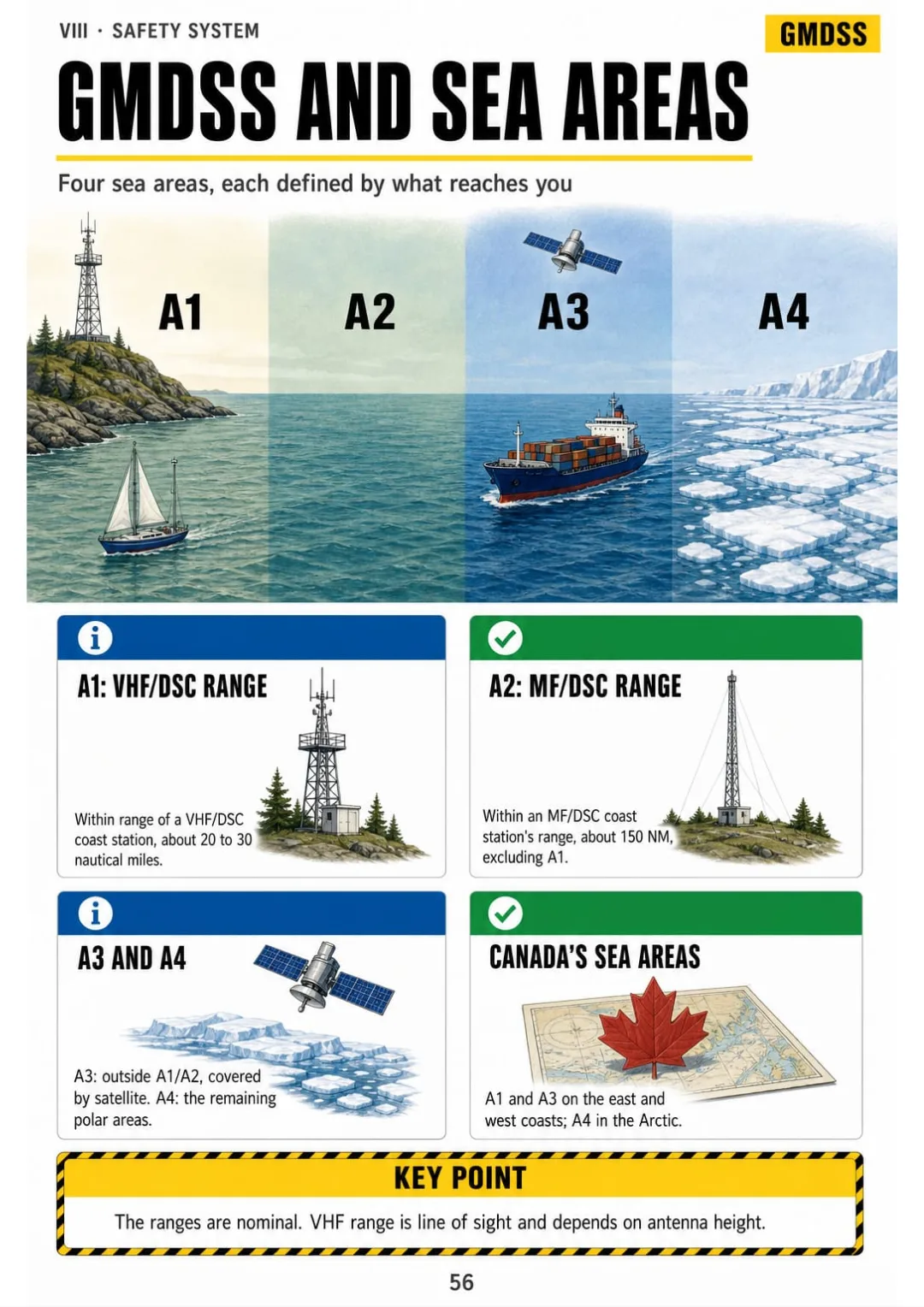
Every page has one big drawing and a box with the steps and channels you need to know:


Swipe to see more →
These are real pages from the book. The table of contents is the full one: 9 parts and 62 topics.
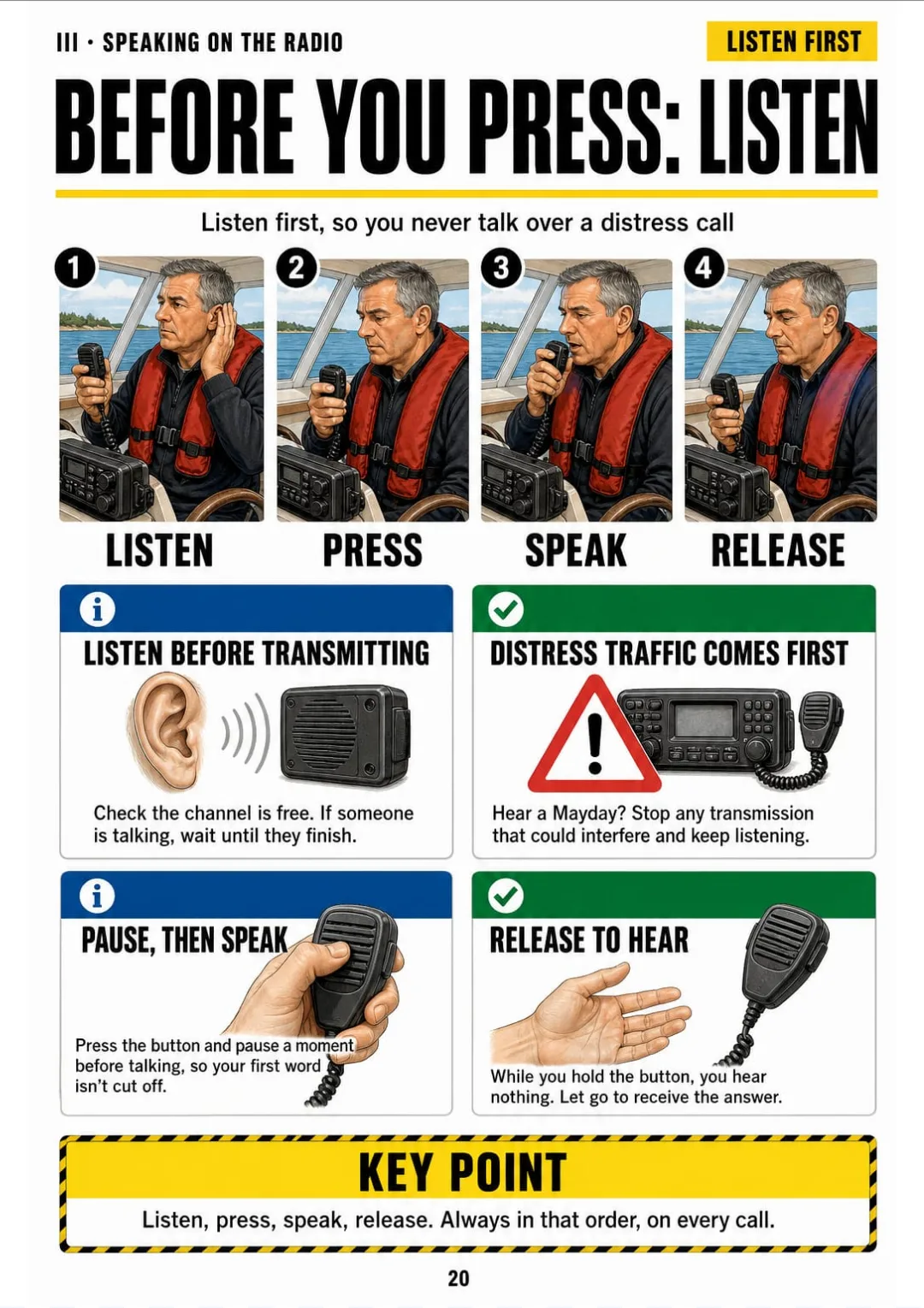
It's your first real call. The marina is on the radio, half the harbour is listening, and your thumb is already on the button before you've checked that the channel is clear.
The manual covered this. One paragraph on listening watch, keying the transmitter and interference, tucked between two pages of rules. Under pressure, a paragraph doesn't come back to you.

In the book, it's one page: the mic drawn in four steps: listen, press, speak, release. You see the pause before the thumb goes down, the words, and the thumb coming off.
Every other topic works the same way: channel 16, the phonetic alphabet, the routine call in five boxes, Mayday, Pan-Pan and Sécurité, the red DSC button. Each one has its own page.
So when you pick up the mic, you know what comes first, and you do it without going back to the manual.

Your radio and your certificate, channels, speaking on the radio, routine calls, Mayday, Pan-Pan and Sécurité, DSC and your MMSI, the rest of the safety system, and review cards: 66 pages, all illustrated.
Think of it this way:
You're coming into a marina you've never visited. You need a slip for the night, and the call has to go out on the right channel, in the right order.
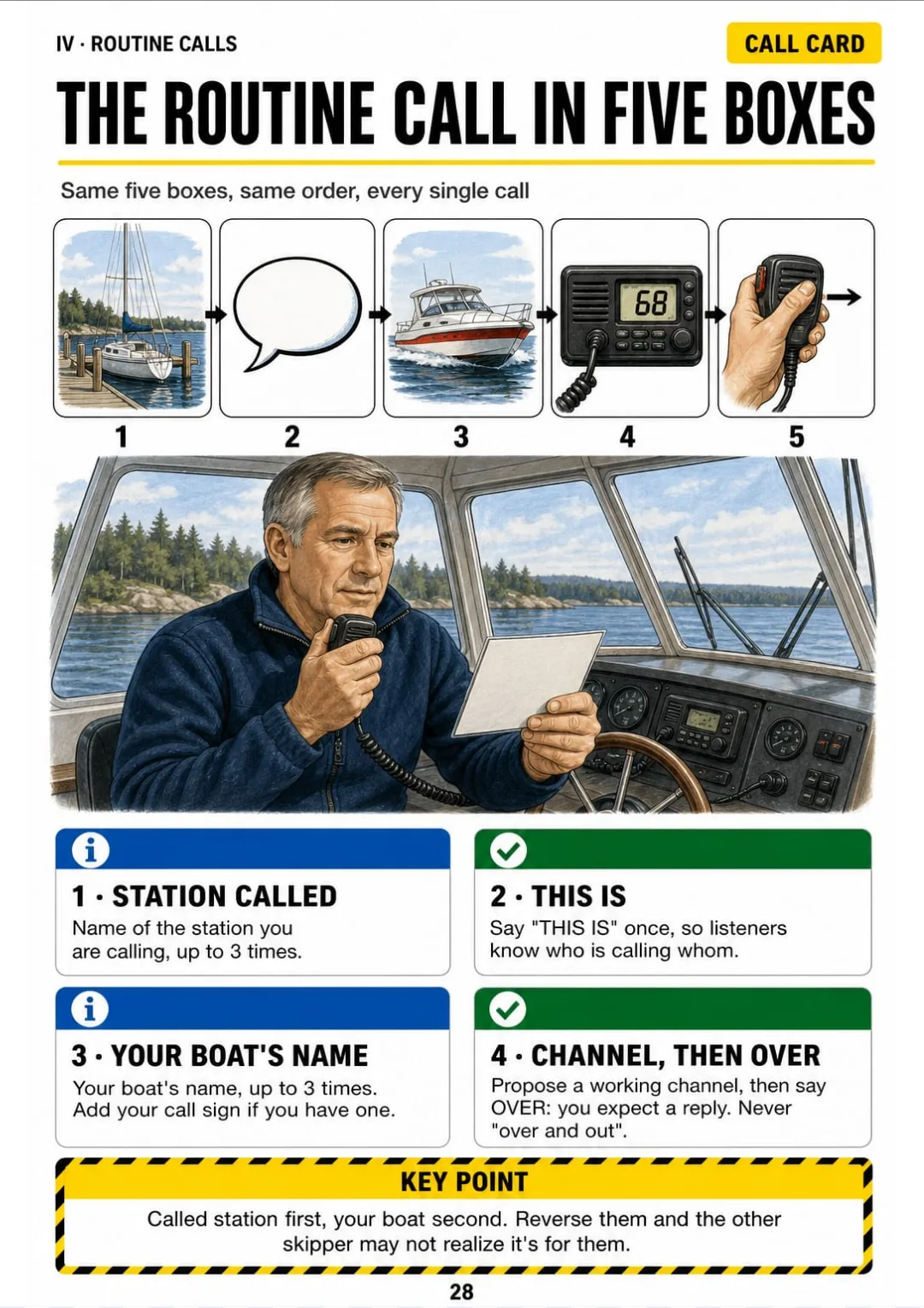
You open the book to the routine call and see five boxes: the station you're calling three times, THIS IS, your boat three times, the working channel, OVER.

Same with channels 16 and 70, the phonetic alphabet, the Pan-Pan card, the DSC alert and the sea areas map: each one on its own page.
Marine VHF Radio Illustrated is 9 parts and 62 topics, all drawn, and at the end, a page with every call, a channel cheat sheet, the most common mistakes and a card for whoever is on board.
What you see drawn, you don't have to memorize.
Who needs the ROC(M), the DSC endorsement, the ship station licence, your VHF button by button, squelch and volume, fixed vs handheld, and why range is line of sight.
Channel 16, channel 70 for DSC only, working channels, channels 6 and 13, Coast Guard and MCTS channels, weather broadcasts and the Canada, US and international modes.
Listening before you transmit, the phonetic alphabet, saying numbers, prowords, identifying your station, 24-hour and UTC time, what's forbidden on the air, and high or low power.
The routine call in five boxes, switching to a working channel, when nobody answers, the radio check, calling a marina, lock or bridge, and non-emergency calls to the Coast Guard.
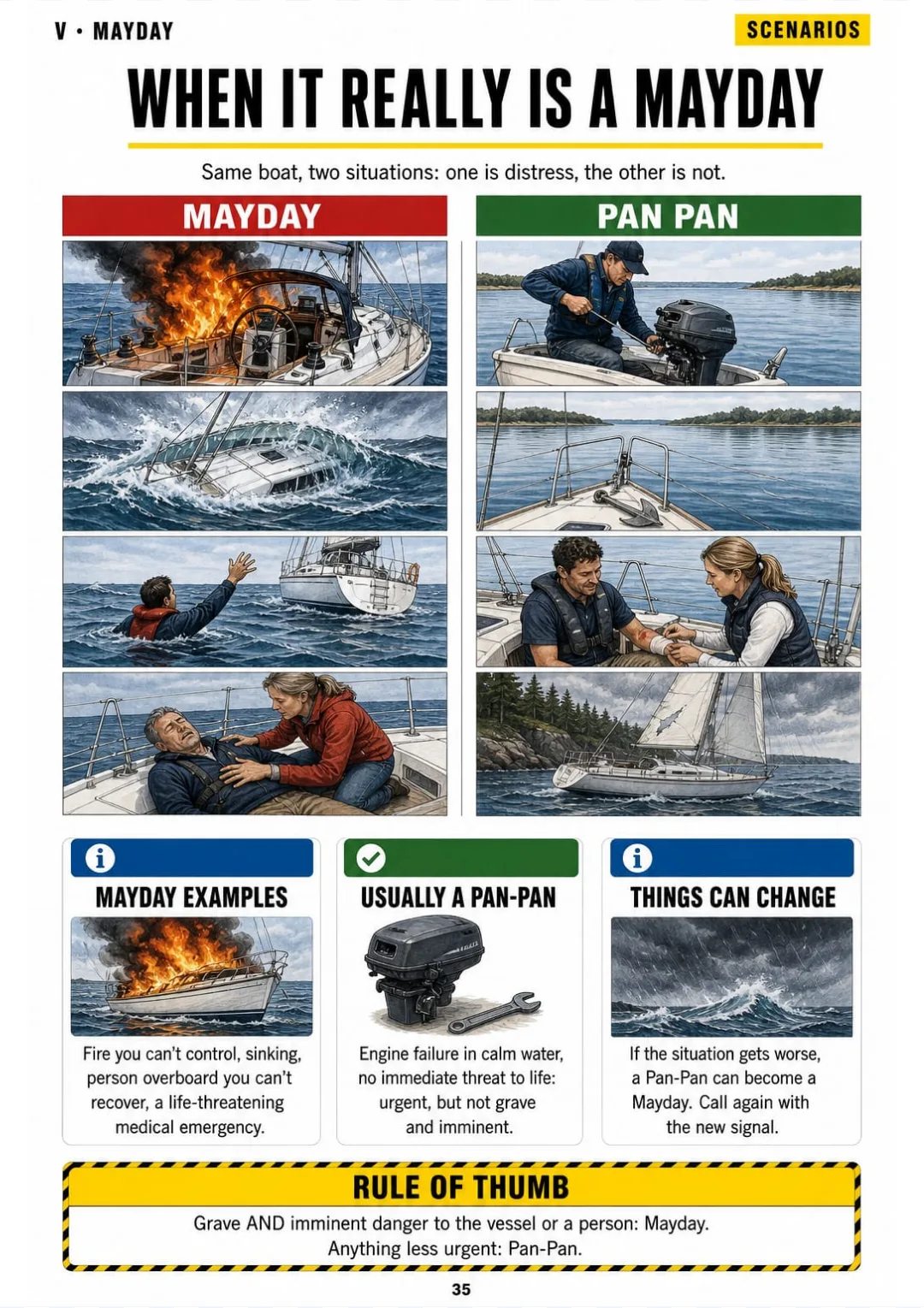
The three priorities, when it really is a Mayday, the Mayday card, saying your position, what to do after the call, hearing a Mayday, Mayday relay, radio silence and cancelling a false alert.
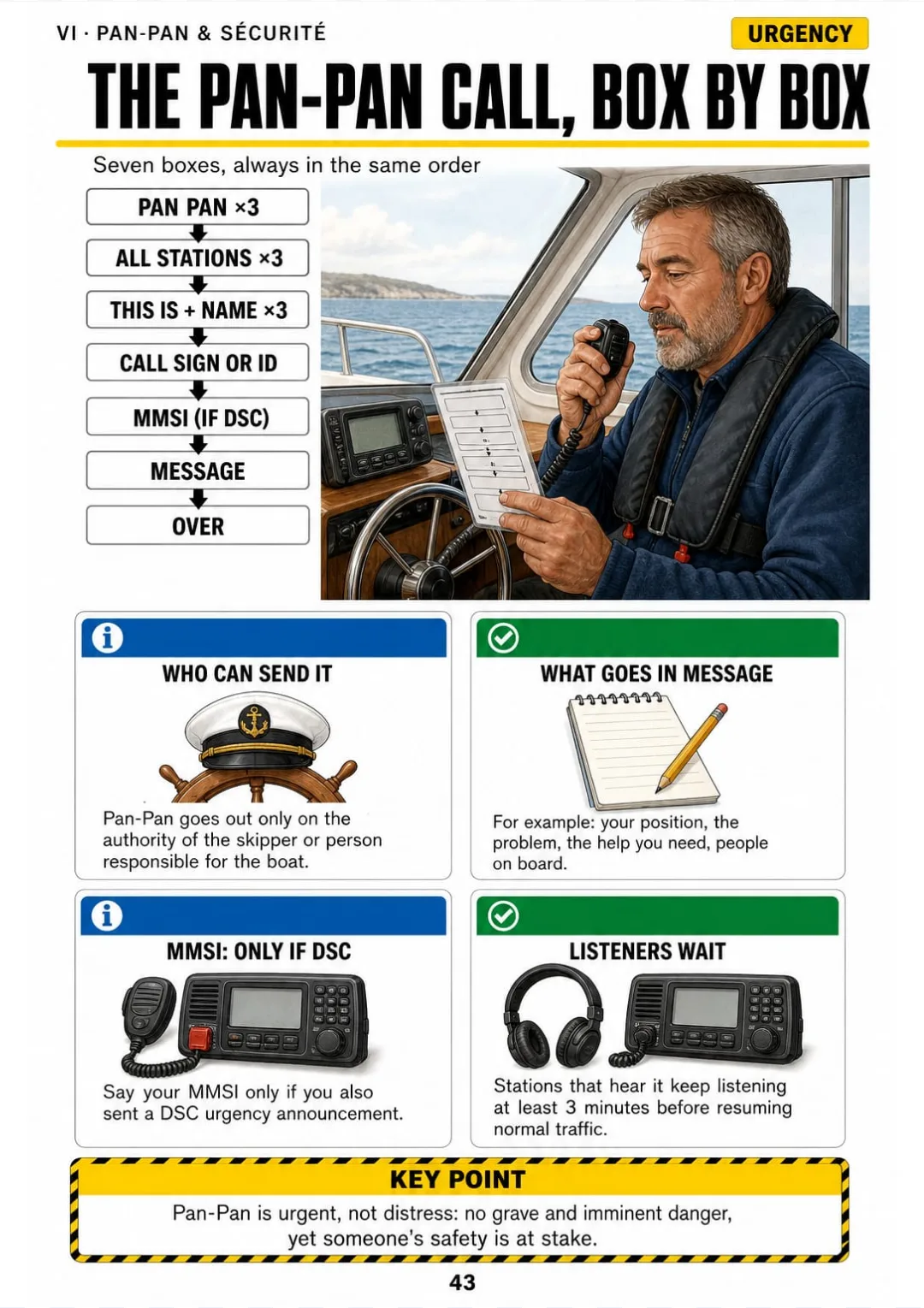
The Pan-Pan card with examples, the Sécurité card, what to do when you hear one, and Notices to Shipping and navigational warnings.
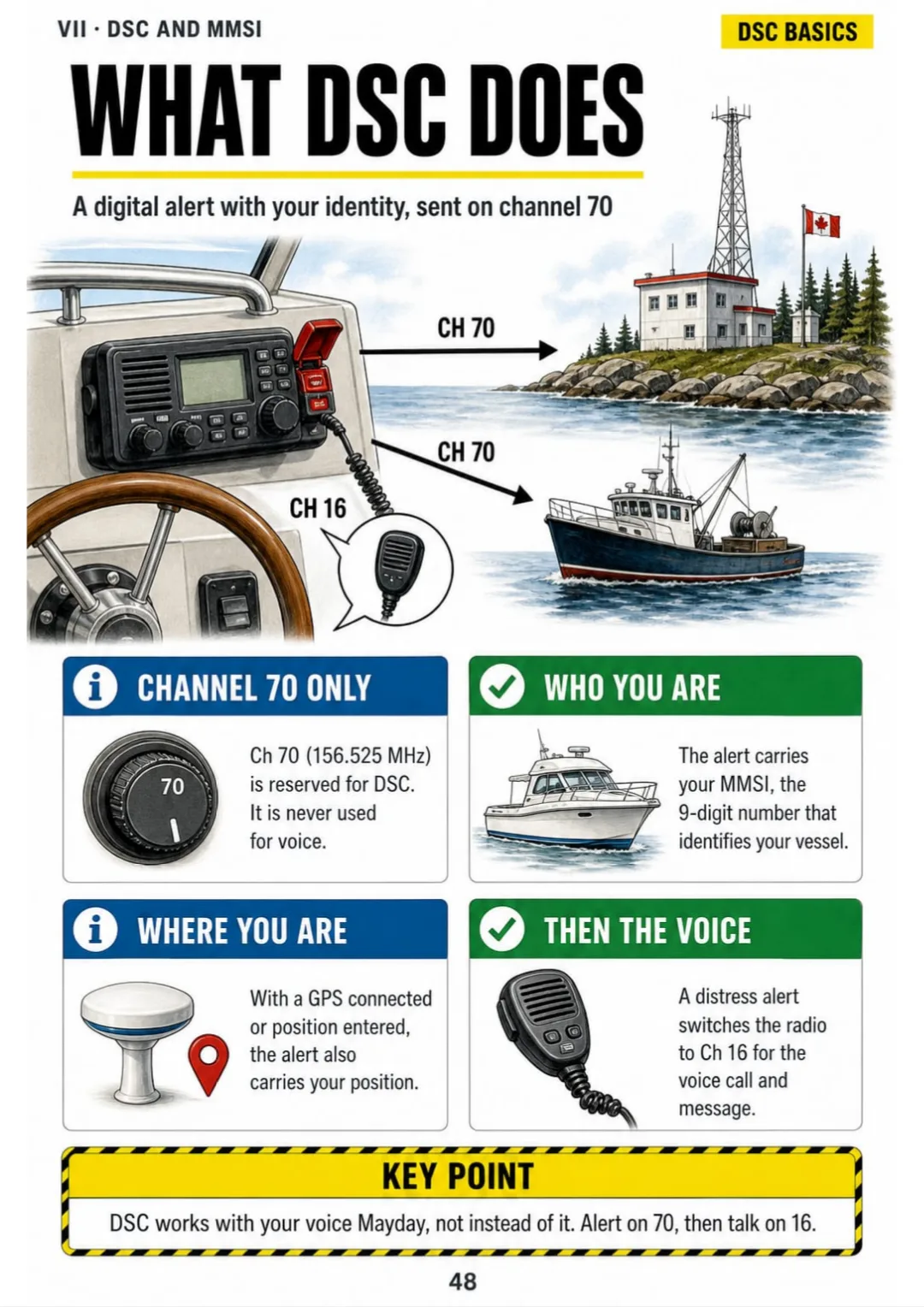
What DSC does, your nine-digit MMSI, connecting the GPS, the distress alert step by step, what happens next, individual, group and all-ships calls, receiving an alert and testing safely.
GMDSS and sea areas on one map, EPIRB and PLB on 406 MHz, SART and AIS-SART, AIS on a pleasure craft, and why your phone is not a marine radio.
All the calls on one page, a channel cheat sheet, common radio mistakes, the questions that are easiest to mix up, a pre-season checklist and the card for whoever is on board.
At the end of the book: All the calls on one page, a channel cheat sheet, the most common radio mistakes and a printable card for the radio.
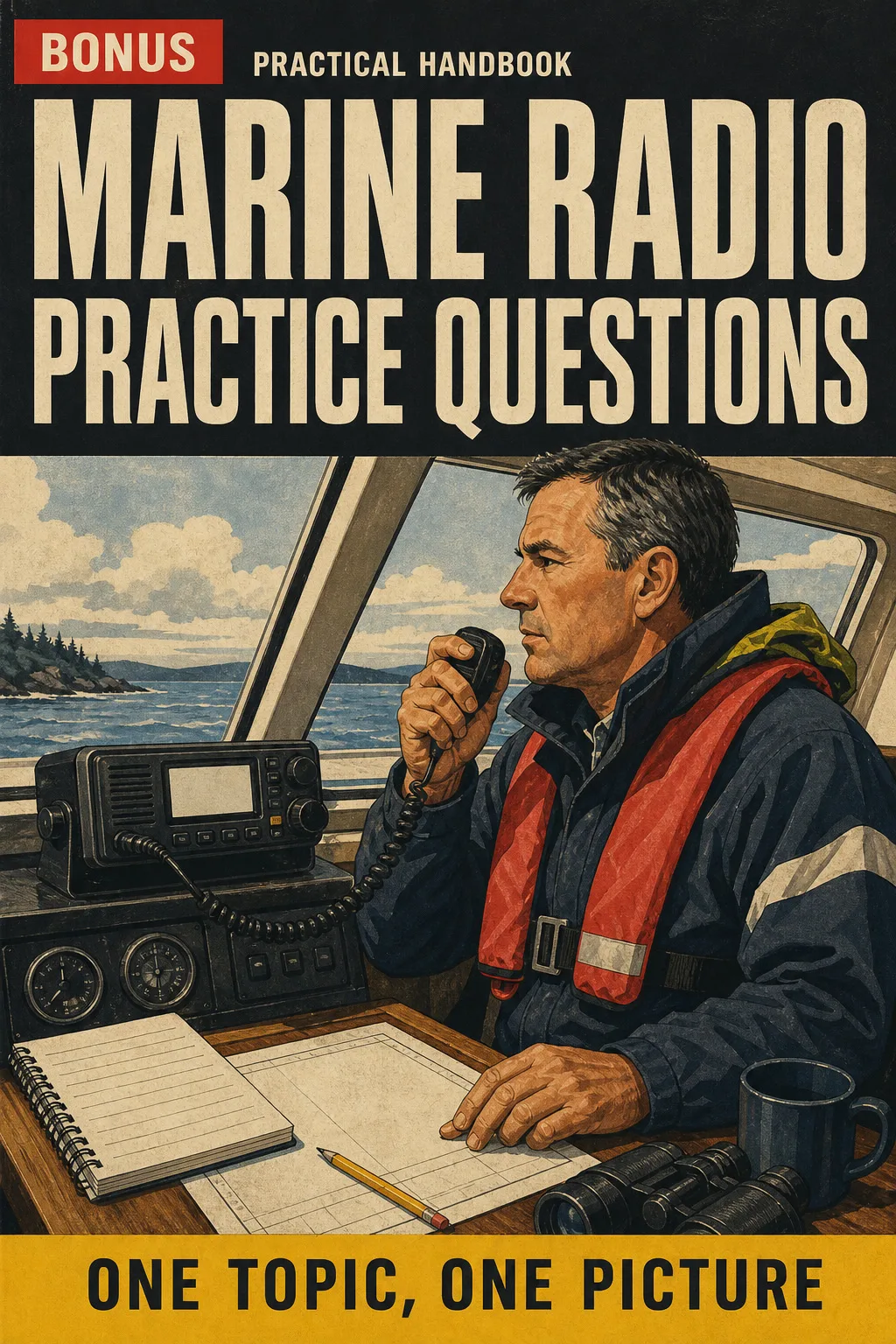
Exam-style multiple-choice questions on every topic, with the answer and a one-line explanation, so you find your weak spots before exam day.

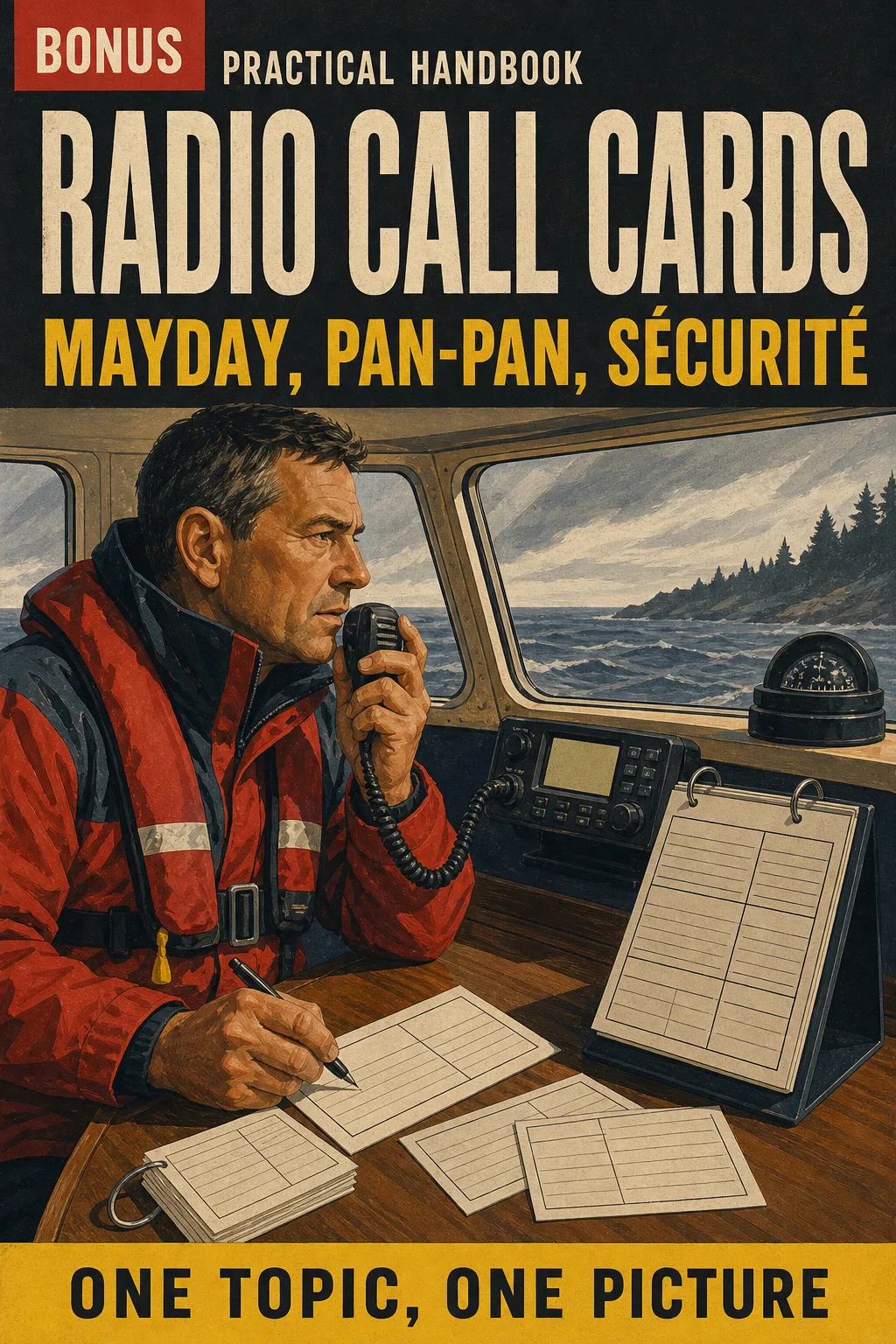
Fill-in cards for each priority call plus the most common radio mistakes, to print and keep beside the radio so anyone on board can make the call in the right order.
📄 This is a digital PDF book sent to your email: nothing is printed or shipped.
PDF by email: We email you Marine VHF Radio Illustrated as a PDF, together with the two free books. It's a single payment: no installments, no extra charges.
Each topic is a single page with a drawing, so a winter evening is enough to get through a whole part and actually remember it.
The review pages, the channel cheat sheet and the practice questions show you what's still fuzzy before exam day.
Print the call cards and keep them beside the VHF, so you, your partner or your crew can make any call in the right order.
📄 This is a digital PDF book sent to your email: nothing is printed or shipped.
Try Marine VHF Radio Illustrated for 30 days, bonus books included.
We refund everything if the file won't open, if the book isn't what you see here, if you were charged twice or if the email doesn't arrive. Just email us.
You pay once. No subscriptions.
Yes. It's written for Canada: the Restricted Operator Certificate (Maritime) and the DSC endorsement, with Canadian channels, the Coast Guard and MCTS. The US channel mode is shown only so you know the difference. No technical background needed: every topic starts with a drawing and a short box with the steps.
It's checked against ISED's RIC-23 study guide for the ROC(M) and the Canadian Coast Guard's Radio Aids to Marine Navigation, current editions.
No. It's independent study material. ISED and the Coast Guard are named only to say what the book covers.
No. It doesn't replace the course or the exam, and it doesn't give you the certificate: you get the ROC(M) by passing the exam with an accredited examiner. What it adds to your manual: every topic on its own page with a drawing, every call in the same boxes and the same order, and cards you can print and keep beside the radio.
No. They're written for this book, in exam style, to help you find your weak spots.
As a PDF by email, to the address you enter at checkout.
No. It's a one-time payment.
Yes. The PDF is ready to print, so you can keep the pages and the call cards on board.
You have 30 days. We refund everything if the file won't open, if the book isn't what you see on this page, if you were charged twice or if the email doesn't arrive: just email us.
No more rereading with nothing sticking.
Channel 16, Pan-Pan, the red DSC button: you see them drawn, and that's it.
You walk into the exam, and onto the boat, knowing where everything is.
Drawings make studying faster.
The book is right below.
One-time payment: US$ 27 · Guarantee: 30 days · PDF by email
YES, I WANT MARINE VHF RADIO ILLUSTRATED FOR US$ 27📄 This is a digital PDF book sent to your email: nothing is printed or shipped.